Is engineered hardwood a lesser version of solid?
No, and that framing is the reason most people get this decision wrong. Both are real wood. The surface you walk on, look at and refinish is hardwood in both cases, cut from the same species, and once a floor is installed and finished nobody can tell them apart by looking.
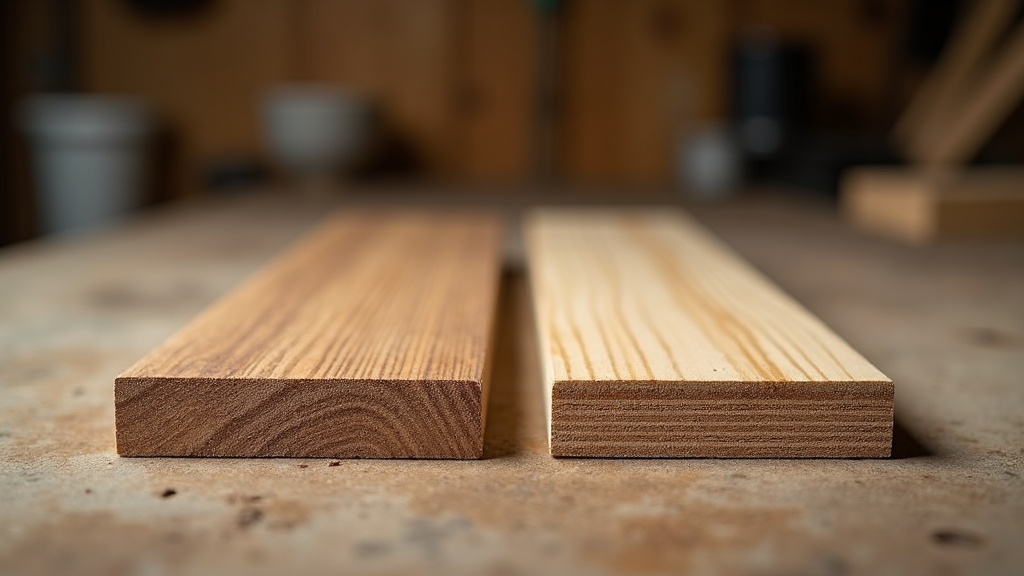
The whole solid vs engineered hardwood question is decided underneath. Solid is one piece of wood all the way down. Engineered is a hardwood wear veneer bonded to a cross laminated core. Everything that follows, including where each one can go and how long each can be renewed, comes from that single structural difference.
So the useful question is not which is better. It is which problem you have.
- If the constraint is the room, and specifically what is under the floor, engineered is usually the answer.
- If the constraint is time, and you want a floor your grandchildren could sand back, solid is the answer.
Very few homes have both constraints in the same room, which is why this decision is usually simpler than it feels.
Solid vs engineered hardwood at a glance
Five properties cover almost the whole solid vs engineered hardwood comparison.
| Property | Solid hardwood | Engineered hardwood |
|---|---|---|
| Surface | Real hardwood | Real hardwood |
| Construction | One piece, traditionally 3/4 inch | Wear veneer over a cross laminated core |
| Seasonal movement | Moves noticeably across the grain | Cross layers oppose that movement |
| Where it can go | Above grade, over a wood subfloor | Also over concrete, below grade and over radiant heat |
| Renewability | Four to six full sandings is the usual figure | Depends entirely on veneer thickness |
Notice that only two rows genuinely differ in kind. The surface is the same material, and the rest follows from construction.
Which one can go where?
This is the question that decides most projects, and it has a short answer. Solid hardwood belongs above grade, over a wood subfloor, in a room with reasonably stable humidity. Engineered goes there too, and also in the places solid cannot.
Concrete is the usual dividing line. Slabs pass moisture upward continuously, and solid planks cannot be nailed to a slab in any case, so a basement, a slab on grade main floor or a condominium almost always calls for engineered. The National Wood Flooring Association’s guidance is to hold interior conditions in the band the wood was acclimated to, commonly 30 to 50 percent relative humidity, and that guidance applies to both products. Solid simply shows the consequences of ignoring it more dramatically.
Radiant heat is the second dividing line. The cross laminated core is far less troubled by the daily warm and cool cycle, so engineered is the standard specification over in floor heating, subject to the manufacturer’s surface temperature limit.
Plank width interacts with all of this. A wide board moves more across its width than a narrow one under the same moisture change, so a 7 inch solid plank is the most demanding combination in the category, and a wide engineered plank is a considerably calmer proposition.
Which one can be refinished more times?
Solid, in almost every case, and the arithmetic is worth seeing because it is where the two products genuinely part company.
A full sanding removes roughly 1/32 of an inch. A solid 3/4 inch plank carries about 1/4 of an inch of usable material above the tongue, so the ceiling is around eight passes and the figure usually quoted in the trade is four to six once real world losses are counted.
Engineered is governed by its wear veneer instead, and that varies enormously between products. A veneer around 2 mm generally allows one careful sanding. Around 3 mm and up allows more than one. Under roughly 1 mm, refinishing is off the table for good, and the floor becomes something you maintain rather than renew.
Treat those as working figures rather than a standard. The thresholds differ between manufacturers and between trade sources, and the number that actually governs is the one in the specification for the plank you are buying. If a retailer cannot produce it, that absence is itself information.
This is the specification that decides whether an engineered floor is a thirty year floor or a fifteen year one, and it is invisible from above. A thick veneer engineered plank and a thin veneer engineered plank look identical in a showroom and have completely different lifespans.
Both products can be screened and recoated, which abrades only the finish and adds a fresh coat without touching the wood. That option is available on almost any veneer thickness and it is the reason many floors never need a full sanding at all.
Is one more stable than the other?
Engineered, and this is the entire reason the category exists rather than a marketing position.
Wood swells and shrinks across the grain as it takes on and gives up moisture. In a solid plank every layer runs the same direction, so that movement accumulates across the width of the board. In an engineered plank the core layers are laminated with their grain running against each other, so one layer’s tendency to expand is opposed by its neighbour’s. It works like two people pulling a rope in opposite directions: the force is still there, and nothing moves very far.
The practical consequence is not that engineered is immune to moisture. It is real wood over a wood based core and it responds to conditions. The consequence is that it moves less for the same change, which is what makes it viable over a slab, in a basement and over radiant heat.
Both are regulated for formaldehyde emissions where a composite core is involved, under California Air Resources Board Phase 2 and the federal EPA TSCA Title VI rule, and reputable engineered products state that compliance.
So which should you actually buy?
Work through it in this order and the answer usually appears by the second question.
- What is the subfloor, and is the room above grade? Concrete, below grade or radiant heat points to engineered before anything else is considered.
- How long do you intend to own the floor? A floor you expect to renew twice points to solid, or to engineered with a veneer of 3 mm or more.
- How stable is the indoor humidity, and how wide are the planks you like? Wide boards and swinging humidity are the combination that punishes solid hardwood most.
- Only then, species, colour and finish.
Where both are genuinely viable, which is a dry room above grade over a wood subfloor, the honest answer is that either will serve and the choice comes down to how long a horizon you are buying for.
Common mistakes
These are the errors that show up repeatedly in this particular comparison.
- Treating engineered as one product. Veneer thickness varies so widely across the category that two engineered floors can have almost nothing in common but the name.
- Comparing total plank thickness between the two. A 3/4 inch engineered plank with a 0.6 mm veneer cannot be sanded; a 1/2 inch engineered plank with 3 mm can be sanded twice. Total thickness answers a doorway question.
- Putting solid hardwood below grade because the room felt dry on the day it was measured.
- Assuming engineered means waterproof. It is real wood over a wood based core, and standing water gets wiped up promptly whatever the product.
- Skipping the slab moisture test before an engineered installation over concrete, on the grounds that engineered is the stable one.
- Choosing a wide solid plank for a house with no humidity control, then reading the seasonal gapping as a defect.
Frequently asked questions
The questions that come up most when people are weighing solid vs engineered hardwood.
Is engineered hardwood real wood?
Yes. The surface is genuine hardwood, the same material as the top of a solid plank, and it is what you see, walk on and refinish. What differs is the construction beneath it, where a cross laminated core replaces solid wood.
Does solid hardwood add more value to a house?
Buyers and appraisers generally look for a real wood floor rather than distinguishing construction, and once installed the two are visually identical. The more useful framing is remaining life: a floor with sanding left in it has more to give a future owner than one without, which favours solid or a thick veneer engineered product.
Can engineered hardwood go over radiant heat when solid cannot?
That is the usual position, yes, because the cross laminated core moves less through the heating cycle. The limit is surface temperature rather than the heating system itself, and the manufacturer’s stated maximum governs.
Which one is quieter underfoot?
Installation method matters more than construction here. A glued down floor of either type is the most solid and quietest, a nailed solid floor is next, and a floating engineered floor is the hollowest sounding of the three. In an apartment or condominium the building’s impact sound requirement usually decides this before preference does.
How do I tell what veneer thickness an engineered floor has?
It is on the specification sheet rather than the sample, usually listed in millimetres as wear layer or wear veneer. If a retailer cannot produce that number for a product, treat its absence as information.
Related reading
The two full guides behind this comparison, plus the overview.
- Solid hardwood flooring, in full: grading, species, refinishing and moisture.
- Engineered hardwood, in full: veneer, core types and installation.
- Flooring types explained, the overview of all six common floors.
Still weighing the two for a specific room? Contact us and we will help you think it through.
To get your project done right, click here for vetted local installers near you.
Sources
The authorities behind the figures above.
- National Wood Flooring Association, installation guidelines and moisture and humidity guidance
- California Air Resources Board Phase 2 and EPA TSCA Title VI, composite wood formaldehyde standards